Inside a passenger jet: nine engineering decisions
A source-checked briefing on the pressure, aerodynamics, structures, and performance calculations working from the gate to touchdown—written for travelers who want the real system logic, not a simplified list of airplane noises.
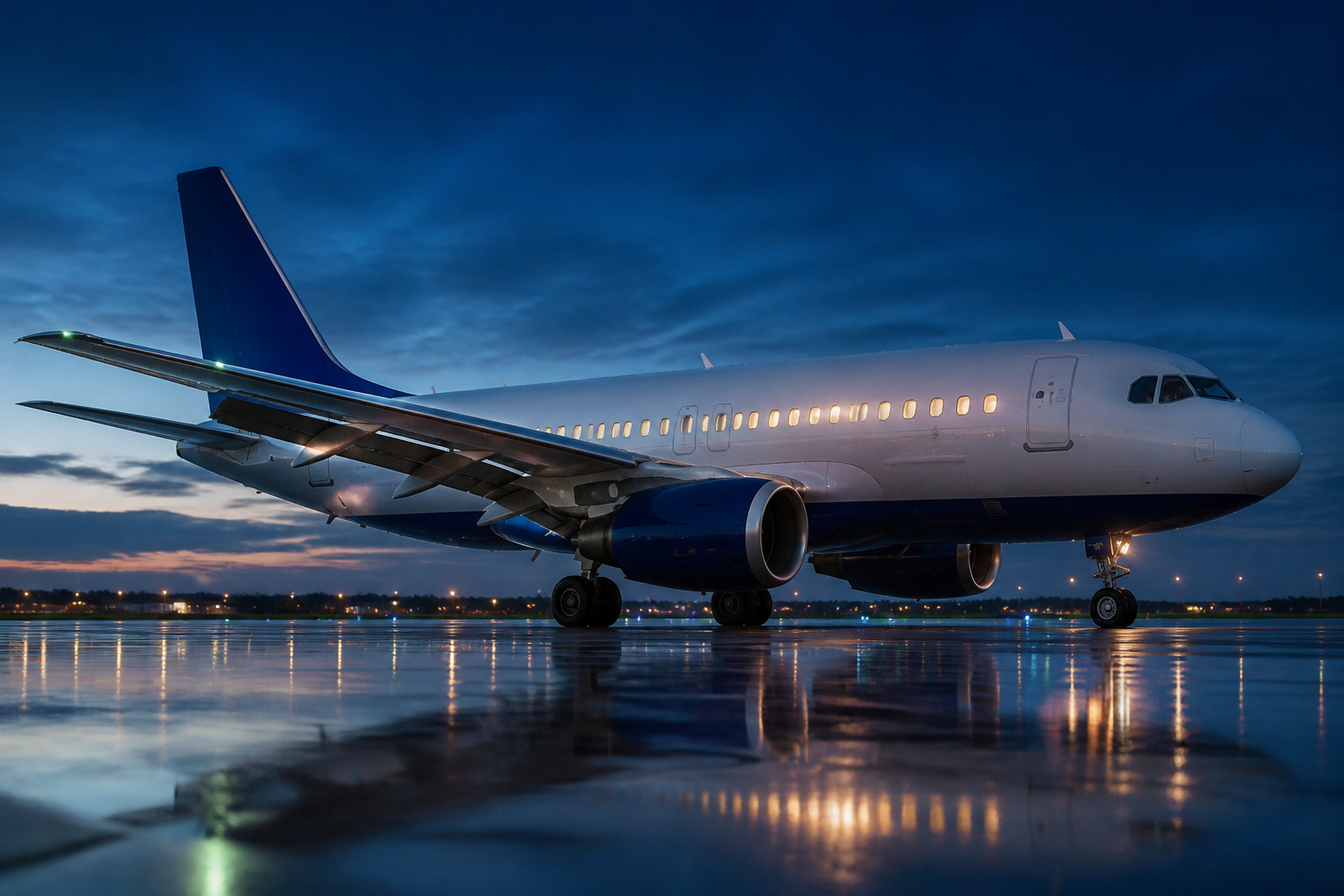
Read the aircraft as a system.
The useful question is rarely “is that normal?” It is “what engineering problem is this component solving, and what tradeoff did the designer accept?”
- 09
- design decisions
- 06
- phases of flight
- FAA + NASA
- primary references
Passenger jets are not collections of isolated parts. The door depends on the pressure schedule; the pressure schedule affects structural weight; weight changes takeoff and landing performance; wing configuration changes the speed range; and weather changes the performance available. The nine decisions below connect those systems without pretending every aircraft uses identical hardware or procedures.
The cabin door is part of a loaded structure
At cruise, the important fact is not simply that a door is latched. It is that the fuselage is a pressure vessel carrying a substantial pressure differential.
- Passenger cue
- Door movement and a brief pressure hiss at the gate
- System logic
- Many conventional passenger doors use plug-style geometry or plug-like motion before their latches engage. In flight, cabin pressure creates a large outward load that the door, stops, frame, and locking system are designed to carry together.
- Design tradeoff
- A secure pressure seal must coexist with an opening large enough for boarding, evacuation, catering, and cargo access.
The cabin is not held at sea-level pressure
Cabin altitude rises during climb by design. The aircraft preserves a breathable environment without forcing the fuselage to carry an unnecessarily high pressure differential.
- Passenger cue
- Ears equalizing and sealed packaging becoming slightly firm
- System logic
- FAA guidance describes systems that typically keep cabin pressure altitude near 8,000 feet at an aircraft's maximum designed cruise altitude. Outflow valves continuously regulate how much air leaves while conditioned air enters.
- Design tradeoff
- Higher cabin pressure can improve comfort, but it increases structural load, fatigue demands, and weight. Aircraft design chooses a certified balance rather than the maximum possible pressure.
The wing can be structure, airfoil, and fuel tank at once
On many transports, sealed sections of the wing box hold fuel. Engineers call this integral construction a wet wing.
- Passenger cue
- Fueling points under the wing and no separate tank in view
- System logic
- Spars, ribs, skins, sealants, pumps, vents, and access panels form a distributed fuel system inside the load-carrying wing. Crews and automated systems manage quantity and balance between tanks.
- Design tradeoff
- The same volume does more than one job and keeps a large mass close to the lifting structure, but inspection, sealing, lightning protection, and fuel balance become part of the wing's engineering problem.
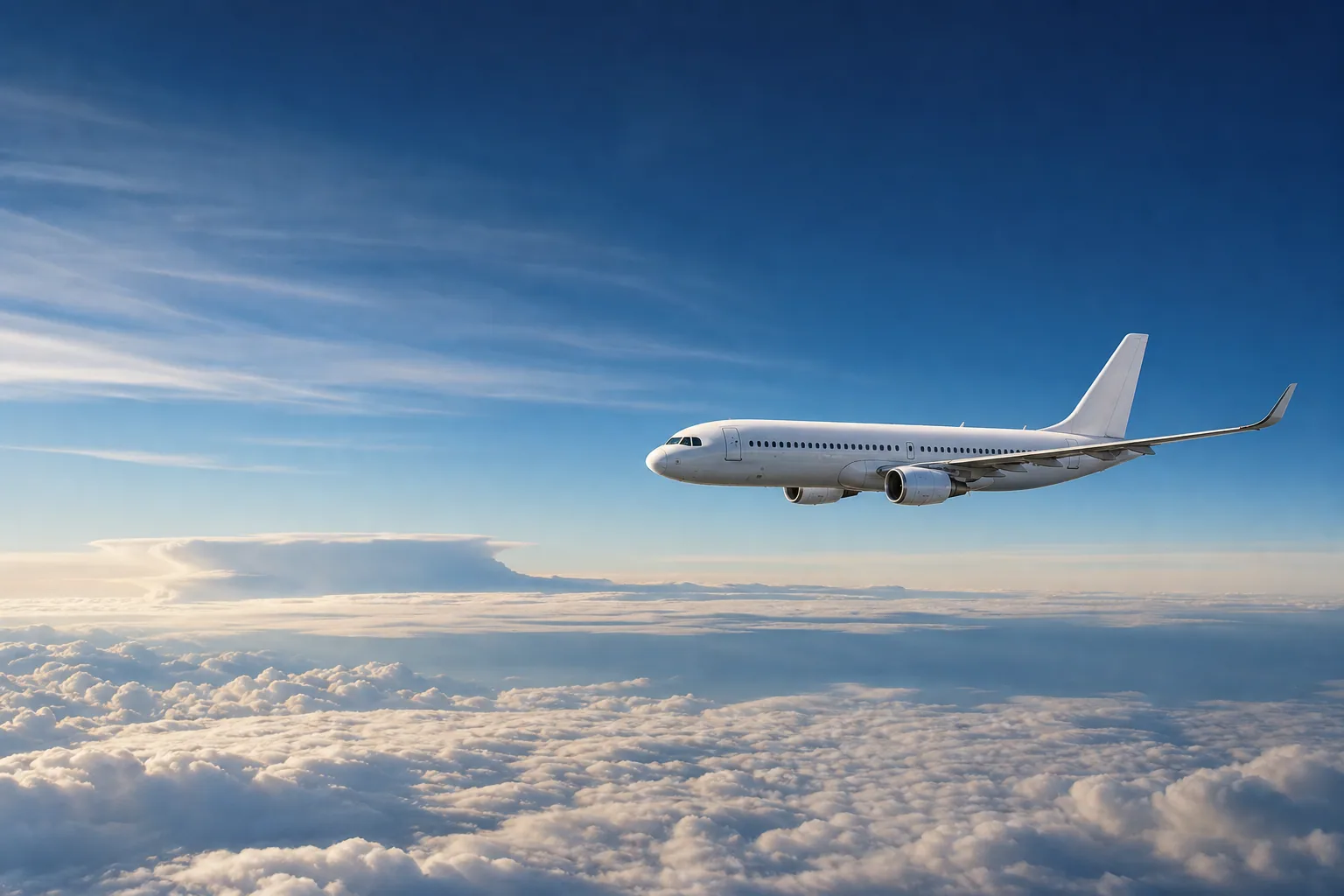
Once acceleration settles and the high-lift system is retracted, speed becomes visually dramatic but physically quiet. Changes in motion are what the cabin reveals.
A coordinated turn redirects the force you feel
The horizon may tilt while your body still feels loaded mainly through the seat. That is the result of coordinated bank, not evidence that the aircraft is sliding sideways.
- Passenger cue
- A banked horizon with little sideways sensation
- System logic
- Banking tilts the total lift vector. Its horizontal component turns the aircraft while its vertical component supports weight. Correct coordination prevents an uncomfortable slip or skid, and the resulting load is felt largely normal to the cabin floor.
- Design tradeoff
- More bank produces a tighter turn but also raises load factor and the lift required to hold altitude. Passenger flights favor shallow, smoothly introduced turns.
Cruise speed is quiet; acceleration is what reaches your body
At cruise, you, the cabin air, and the aircraft already share nearly the same forward velocity. Constant speed does not press you toward the back of the airplane.
- Passenger cue
- A calm cabin while the ground passes hundreds of miles per hour below
- System logic
- Your body responds to changes in velocity: the takeoff roll, braking, a turn, vertical gusts, or control inputs. This is why the sensation of flight is better understood as a sequence of accelerations than as raw speed.
- Design tradeoff
- Aircraft can travel quickly without feeling dramatic, but even a short acceleration can be noticeable. Ride comfort therefore depends on how forces change over time, not just their peak value.
The wing changes configuration because one shape cannot optimize every phase
Cruise rewards low drag. Takeoff and landing require controlled flight at much lower speeds. Flaps and, on many aircraft, leading-edge devices bridge those conflicting demands.
- Passenger cue
- Panels extending before departure or arrival, then retracting in climb
- System logic
- High-lift devices change wing camber and sometimes effective area. After touchdown, ground spoilers rise to reduce lift and transfer more aircraft weight to the landing gear, making wheel braking more effective.
- Design tradeoff
- Extension increases lift capability but also drag, noise, and mechanical complexity. Retraction restores the cleaner cruise shape.
Winglets reshape a three-dimensional airflow problem
A wingtip vortex is a consequence of producing lift. A well-integrated winglet can weaken that vortex system and reduce induced drag; it does not simply block air from escaping.
- Passenger cue
- A vertical, swept, or split device at the wingtip
- System logic
- NASA's work on transport winglets showed that wingtip geometry can improve lift-to-drag performance. The result depends on the complete wing, operating condition, structural weight, and the winglet's own drag.
- Design tradeoff
- Efficiency gains must justify added structure and bending load. That is why different airframes use blended winglets, raked tips, split devices, or no retrofit at all.
Landing is a managed transfer of energy, not one braking event
A jet reaches the runway with kinetic energy that must be dissipated predictably. Several systems divide the work.
- Passenger cue
- A firm touchdown, panels rising, engine roar, and sustained deceleration
- System logic
- Ground spoilers reduce lift and add drag, wheel brakes convert energy into heat, anti-skid protects tire grip, and reverse thrust can add deceleration—especially at higher speed. The exact sequence and contribution vary by aircraft and conditions.
- Design tradeoff
- Stopping margin depends on weight, speed, runway length and condition, wind, brake temperature, and configuration. The loudest system is not necessarily doing most of the stopping.
Weight, wind, temperature, and elevation rewrite the runway calculation
A runway is not simply long or short. Available performance changes with aircraft weight, air density, wind, surface condition, and obstacles.
- Passenger cue
- A longer takeoff roll, a different runway, or a return that includes holding
- System logic
- High density altitude—often produced by high elevation and heat—reduces aerodynamic and engine performance and can increase runway required. A headwind lowers groundspeed for a given airspeed. If a flight returns heavy, crews may burn fuel, jettison it when the aircraft is equipped and circumstances favor it, or conduct an approved overweight landing.
- Design tradeoff
- There is no universal 'must dump fuel' rule. Time, runway, weather, system status, landing limits, and the urgency of the event drive the operational decision.
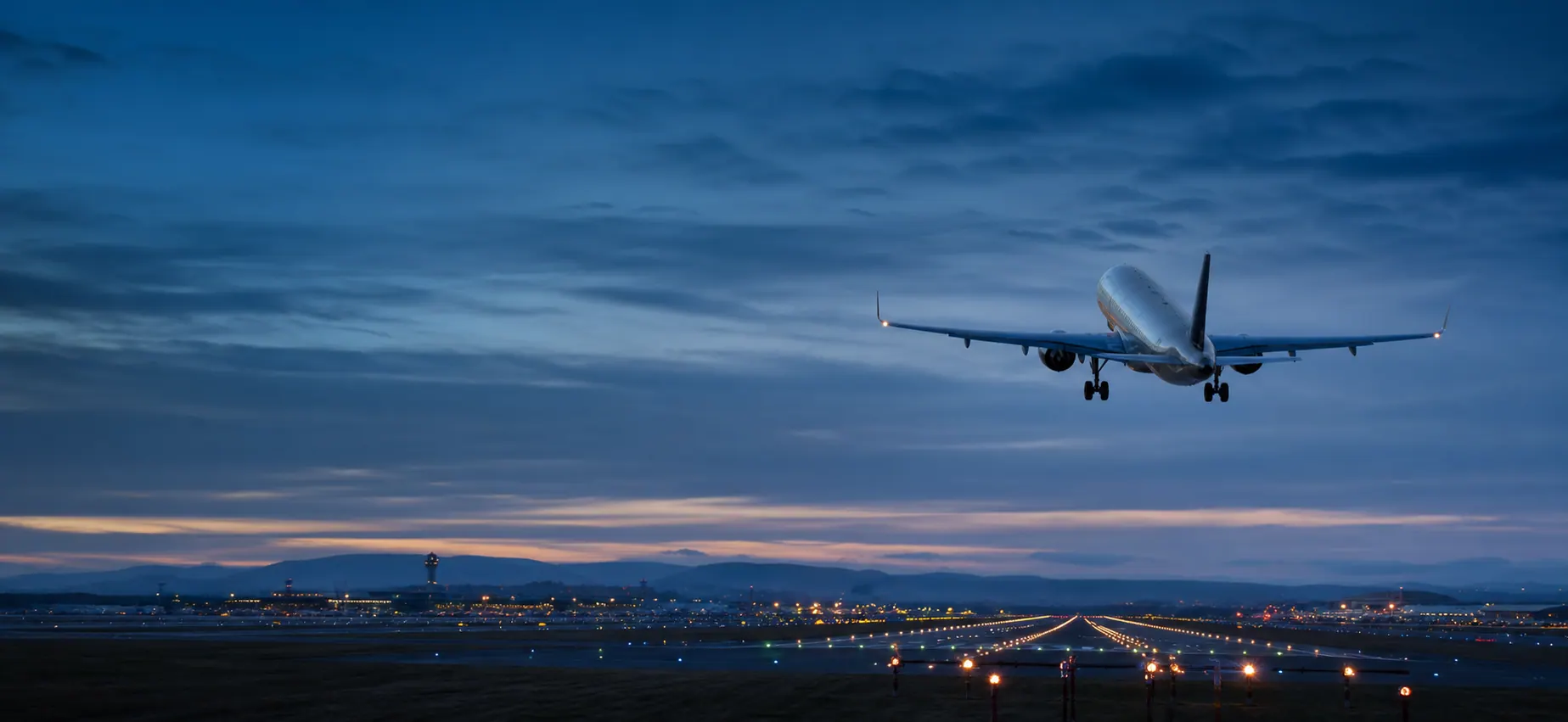
Approach configuration creates lift at lower speed. After touchdown, lift is deliberately reduced so tires and brakes can do their work.
Even the cabin is a geometry problem.
Long-haul lie-flat seats often interlock or stagger across rows. The layout is effectively a tessellation problem: preserve a horizontal sleeping surface, aisle access, privacy, structure, and service space while fitting a commercially viable number of seats inside a curved pressure vessel. The unusual angles are not decoration; they are spatial optimization.
Primary references, not aviation folklore.
- FAA Pilot's Handbook of Aeronautical Knowledgepressurization, systems, aerodynamics, performance
- FAA Airplane Flying Handbookcoordinated turns, jet operations, landing systems
- NASA Glenn winglet research overviewinduced drag and wingtip design
- FAA airplane stopping-performance analysisspoilers, brakes, and reverse thrust
- FAA density-altitude guidancetemperature, elevation, runway, and climb performance
The original conversation supplied the questions. This article independently rewrites and fact-checks the answers. Aircraft-specific procedures always come from the operator and approved aircraft documentation.
Four passenger questions worth answering precisely
Can a passenger door open at cruise altitude?
Conventional doors use mechanical locking systems and are designed as part of the pressure vessel. On many designs, plug-style geometry plus pressure load makes opening against the normal differential impractical. Exact mechanisms vary, so “pressure keeps every door shut” is directionally useful but incomplete.
Why does a banked turn not feel like sliding sideways?
In a coordinated turn, banked lift curves the flight path and the combined load is felt mainly through the seat and floor. A slip or skid is uncoordinated and feels different. Automation can make control smooth, but coordinated turns are a foundational piloting concept, not a computer-only invention.
Does every aircraft dump fuel before an early return?
No. Some aircraft have no fuel-jettison system. Depending on urgency and approved limits, crews may hold to burn fuel, jettison when equipped, or land overweight and complete the required inspection.
Is reverse thrust what stops the airplane?
It is one contributor. Wheel brakes normally provide the central stopping force, ground spoilers reduce lift and improve tire loading, aerodynamic drag helps, and reverse thrust is most effective at higher speed. Runway condition and aircraft procedure determine how each is used.